五、阅读理解
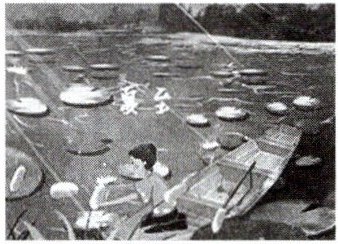
In the Chinese lunar calendar (农历), there are 24 solar terms (节气) in a year. Summer Solstice, the 10th solar term falls on June 21 this year.
On the day of Summer Solstice, daylight is the longest in a whole year in the northern hemisphere (北半球). According to a study, Mohe, the sleepless town of China, has about 17 hours' daylight on the day.
Summer Solstice was an important festival in ancient (古代的) China. As early as the Han dynasty, when the Mid-Autumn Festival and the Double Ninth Festival were not as important as they are today, Summer Solstice was already celebrated.
Before the Qing dynasty, people even had a one-day holiday on Summer Solstice. In the Song dynasty, officials (官员) could have three days off to celebrate Summer Solstice.
There is a saying in Shandong which goes, "Eat dumplings on Winter Solstice and eat noodles on Summer Solstice." Many people in Shandong and other places of China eat cold noodles on this day. Dragon boat races have taken place on Summer Solstice in Shaoxing, Zhejiang rather than (而不是) at the Dragon Boat Festival from Ming and Qing dynasties.
(
B
) 1. People started to celebrate Summer Solstice in ______.
A. the Ming dynasty B. the Han dynasty
C. the Song dynasty D. the Qing dynasty
(
B
) 2. What do people in Shandong eat on Summer Solstice?
A. Rice dumplings. B. Noodles. C. Dumplings. D. Moon cakes.
(
B
) 3. Which of the following is TRUE according to the passage?
A. The Mid-Autumn Festival was the most important festival in ancient times.
B. The daylight is the longest in a whole year in China on the day of Summer Solstice.
C. All people had a three-day holiday to celebrate Summer Solstice in Song dynasty.
D. People always have dragon boat races in Shaoxing at the Dragon Boat Festival.
(
C
) 4. The passage is mainly about ______.
A. the Dragon Boat Festival B. traditional Chinese food
C. Summer Solstice D. Winter Solstice