B
Eradajere Oleita, a student and environmentalist from Detroit, is asking for help from local snack lovers.
Rather than throw your empty chip bags into the dustbin, give them away so she can turn them into sleeping bags for the homeless. It is called the Chip Bag Project.
Oleita and her volunteer helpers collect the empty bags which chip eaters drop off. After they sanitize(消毒) the chip bags in hot water, they cut them open, lay them flat, and iron(熨) them together. They use some cloth from old coats to
line the insides.
It takes about four hours to make a sleeping bag and each takes around 150 to 300 chip bags, depending on whether they’re single-serve or family size.
“The result is a sleeping bag that is waterproof(防水的), lightweight, and easy to carry around,” Oleita told the Detroit News.
Since its start in 2020, the Chip Bag Project has collected more than 800,000 chip bags and created 110 sleeping bags. Sure, it would be simpler to raise the money to buy new sleeping bags. But that’s only half the goal for Oleita—whose family moved to the United States from Nigeria ten years ago with the hope of achieving a better life—and her volunteers. “We are devoted to making an effect not only socially, but environmentally,” she says.
(
4
)4. According to the text, Oleita is a
A
.
A. kind person
B. local snack lover
C. homeless child
D. chip eater
(
5
)5. 新考法 Which picture may show “line the insides”?
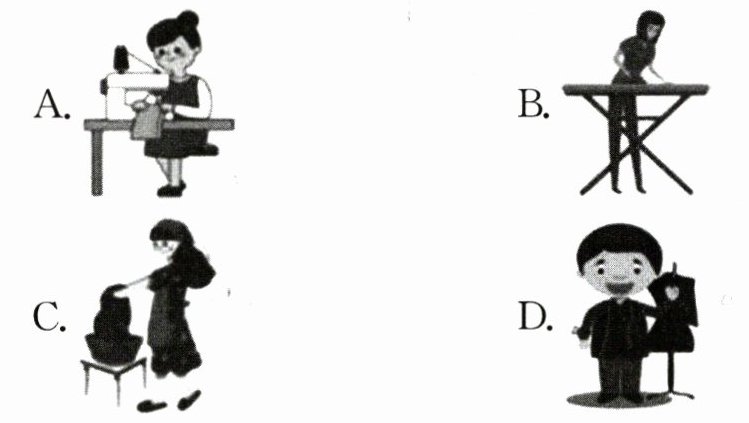
(
6
)6. From the last paragraph we can know that Oleita
C
.
A. has achieved the goal of her team
B. wants 110 sleeping bags a month
C. manages to protect the environment
D. moves to Nigeria with her family
(
7
)7. 新考法 If you want to support the Chip Bag Project, what can you do?

A. Buy new sleeping bags for the homeless.
B. Donate used chip bags to Oleita.
C. Sell old coats to raise money.
D. Volunteer to iron cloth for the project.