练习 句型转换。
The glass is full of milk.(改为同义句)
The glass is
filled
with
milk.
答案:练习
filled with
解析:
翻译:
练习 句型转换。
这个玻璃杯装满了牛奶。(改为同义句)
这个玻璃杯被牛奶填满了。
根据短文内容,完成下列任务。
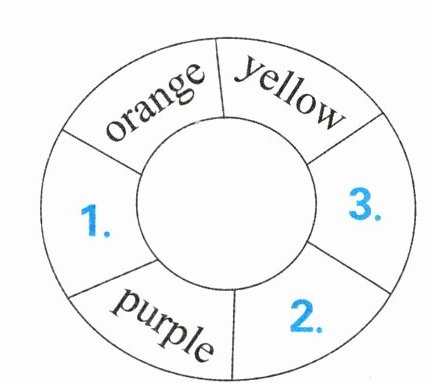
Colours are full of magic. In traditional art, there are three primary colours(三原色): red, blue and yellow. And three secondary colours(次生色): orange, purple and green. We can mix primary colours to make secondary colours. Here's the colour wheel(色轮). Look at orange. Red and yellow are next to(紧挨着)orange. We mix red and yellow to make orange. Red and blue are next to purple. We mix red and blue to make purple. Do you know what makes green?
(一)根据短文内容,选择正确的答案。
(
B
)1. What are primary colours in traditional art?
A. Red, green and yellow.
B. Red, blue and yellow.
C. Orange, red and yellow.
(
B
)2. What's the meaning of “mix” in Chinese?
A. 制作
B. 混合
C. 交往
(
A
)3. What makes green?
A. Blue and yellow.
B. Blue and purple.
C. Orange and yellow.
(二)根据短文内容,在色轮中填入正确的颜色。
1.
red
2.
blue
3.
green
(三)新趋势 开放性设问 What colour do you like? Why?
I like pink. Because it's a beautiful colour. (答案不唯一)
答案:Passage 3 Magic colours
(一) 1. B
2. B 解析 根据短文中画线单词所在句“We can mix primary colours to make secondary colours.”可知,我们可以将原色“____”成次生色,可推知 mix 意为“混合”。故选 B。
3. A 解析 根据常识可知,黄色加蓝色可得到绿色。故选 A。
(二) 1. red 2. blue 3. green
(三) I like pink. Because it's a beautiful colour. (答案不唯一)
解析:
翻译:
根据短文内容,完成下列任务。
颜色充满魔力。在传统艺术中,有三种原色:红色、蓝色和黄色。还有三种次生色:橙色、紫色和绿色。我们可以混合原色来得到次生色。这是色轮。看橙色,红色和黄色紧挨着橙色,我们把红色和黄色混合就能得到橙色。红色和蓝色紧挨着紫色,我们把红色和蓝色混合就能得到紫色。你知道什么(颜色混合)能得到绿色吗?
(一)根据短文内容,选择正确的答案。
(B)1. 传统艺术中的原色是什么?
A. 红色、绿色和黄色。
B. 红色、蓝色和黄色。
C. 橙色、红色和黄色。
(B)2. “mix”的中文意思是什么?
A. 制作
B. 混合
C. 交往
(A)3. 什么(颜色混合)能得到绿色?
A. 蓝色和黄色。
B. 蓝色和紫色。
C. 橙色和黄色。
(二)根据短文内容,在色轮中填入正确的颜色。
1. 红色
2. 蓝色
3. 绿色
(三)新趋势 开放性设问 你喜欢什么颜色?为什么?
我喜欢粉色。因为它是一种很漂亮的颜色。(答案不唯一)