Ⅵ. 任务型阅读
阅读并根据下面的短文,在表格后的横线上填入一个最恰当的单词或回答表格中的问题。
What do you usually do on trains? Sleep, read books, or use your phone? In China, some trains are turning into mobile cultural classrooms for passengers to experience Chinese culture in a new way.
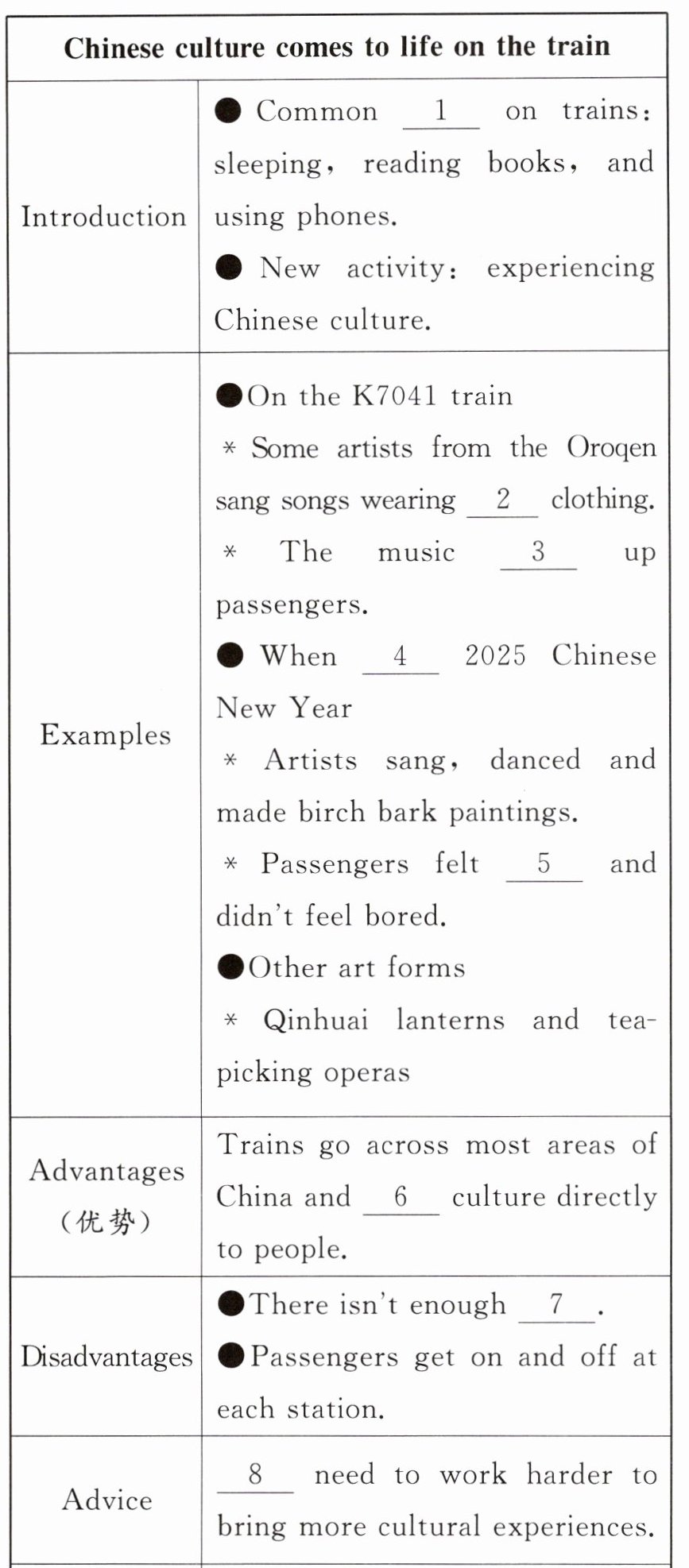
Passengers on the K7041 train from Harbin to Mohe in Heilongjiang met five artists from the Oroqen (鄂伦春族). Gulayier Ente was one of the artists. And he sang Oroqen songs on the train in clothing with strong traditional colour. The beautiful music made people cheerful. "For me, the experience was wonderful. Being closer to passengers and communicating with them helped us enjoy ourselves," said Gulayier.
The train started running in January, 2025 to celebrate Chinese New Year. During the train journey, artists sang, danced and made birch bark (桦树皮) paintings. "I used to be bored when I took a train. Now, I can watch special shows and learn about Chinese culture. It's really exciting!" said Ms Zhang, a visitor from Guizhou.
In fact, there are also other forms of Chinese art on trains, such as Qinhuai lanterns and tea-picking operas. Trains go across most areas of China, so they are perfect for sharing Chinese culture with more people. Unlike museums, trains go near to people and can help them experience culture directly (直接地).
Of course, this is just the first step in the train cultural experience, and it still has a long way to go. For example, how can we make the train experience better when there is only a little space on the train? And people are getting on and off at each station. Then how can we make sure every passenger has full train experience? Every train worker needs to work harder to bring more Chinese culture to train journeys.
1.
activities
2.
traditional
3.
cheered
4.
celebrating
5.
excited
6.
bring
7.
space
8.
Workers
9.
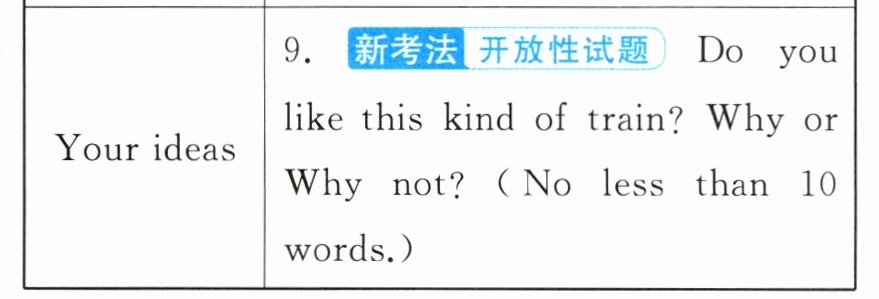
Yes. Because I can learn about Chinese culture from artists directly.(答案不唯一,言之有理即可)