Ⅲ. 阅读理解(每小题 2.5 分,满分 20 分)
A
跨学科
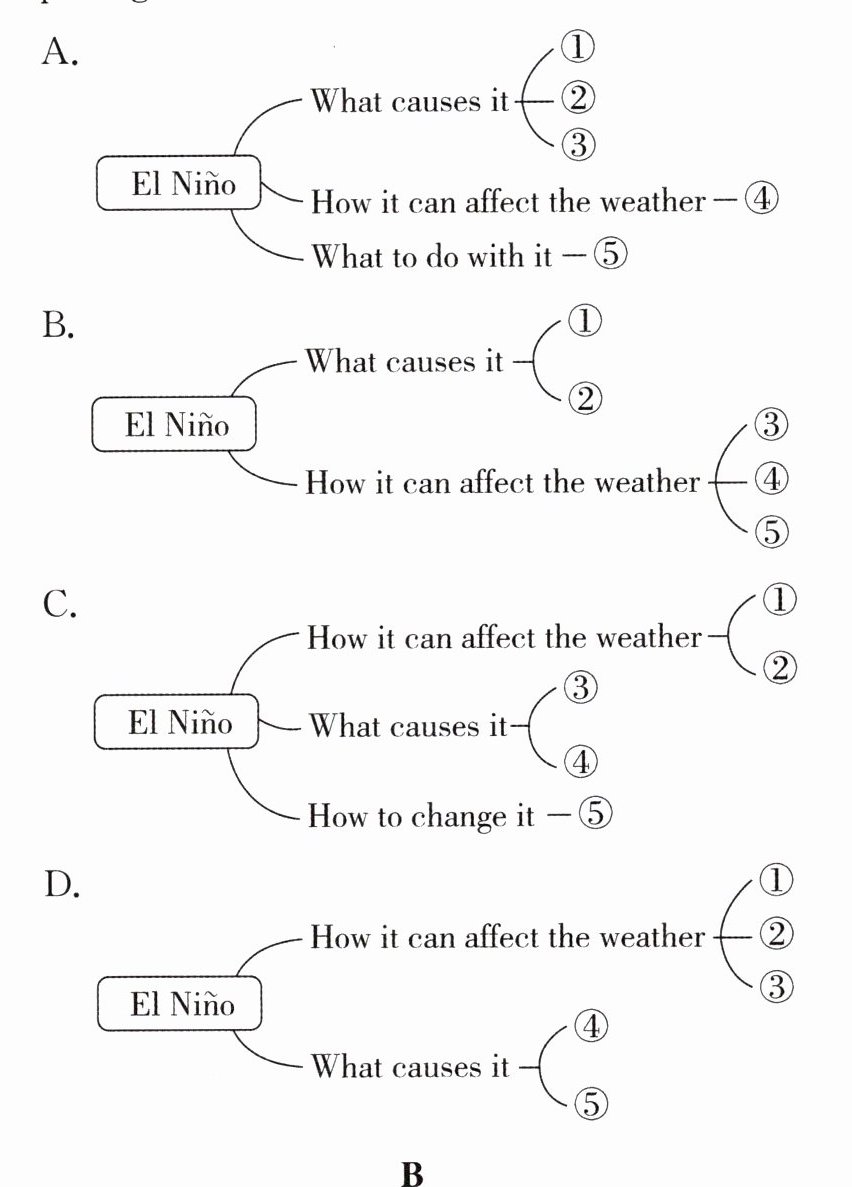
地理 ①Do you notice that the sea gets warmer every few years? This is called “El Niño”—a big area of warm water in the Pacific Ocean. But why does it happen?
②El Niño starts when something changes the winds. Scientists think the winds come from the northern half of the world and then
form this energy. These winds blow south over the ocean. When they meet warm sea water,the water gets even warmer and starts to move.
③Imagine blowing on a cup of soup—the wind makes the soup move. Similarly,strong winds push the warm water east across the Pacific. This warm water piles up and creates El Niño. The process happens every 2 to 7 years,making the weather change,like heavy rain.
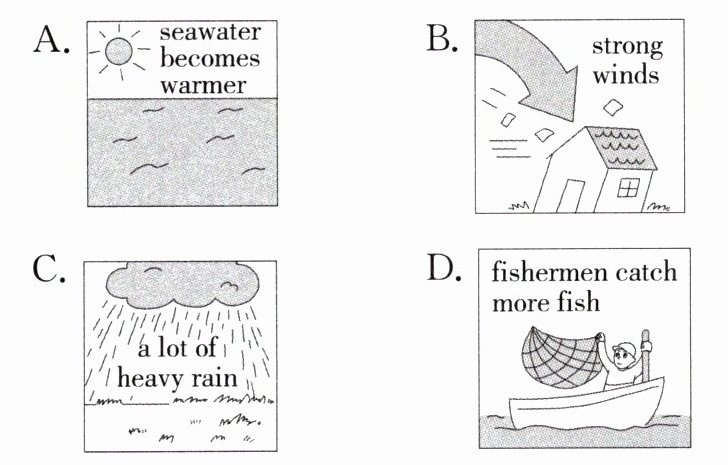
④ As well as the sea water becoming warmer,El Niño affects the weather in every part of the world. It can bring a lot of heavy rain. Besides,strong winds can break buildings down. It can even mean that fishermen cannot catch fish.
⑤We can't do much about El Niño because it's something that happens by itself in nature. But we can try to improve the weather by not letting the earth get too warm and by keeping the air clean. The most important job for scientists is to learn how to find out when El Niño will bring dangerous weather. Then,people can try to prepare for violent weather such as storms. Modern technology(技术)can be helpful. Still,it's hard to say when or where El Niño will cause problems for us.
1. 新考法 图示理解 According to the passage,which picture is NOT the result of El Niño?
2. Which sentence uses “form” with the same meaning as the underlined word?
A. Ice and water are different forms of the same thing.
B. Please fill in the form with your name and phone number.
C. He is telling the story in the form of a poem.
D. We can form a study group to help each other.
3. Why does the writer write the passage?
A. To ask fishermen to be careful during storms.
B. To give a scientific introduction of El Niño.
C. To help farmers get ready for dry weather.
D. To show people how to stop El Niño.
4. 新考法 篇章结构 What's the structure of the passage?