Ⅳ. 任务型阅读(每小题2分,共10分)
[2024陕西西安咸新区期中]
阅读下面短文,根据短文内容,完成下列各题。
As we all know, doing housework is helpful for teenagers' development. Do teenagers in small villages do housework at home? How about the teenagers in big cities? We did a survey (调查) last month. We asked 4,000 teenagers in China. Half of
them come from big cities. The others are from small villages. Let's look at the result.
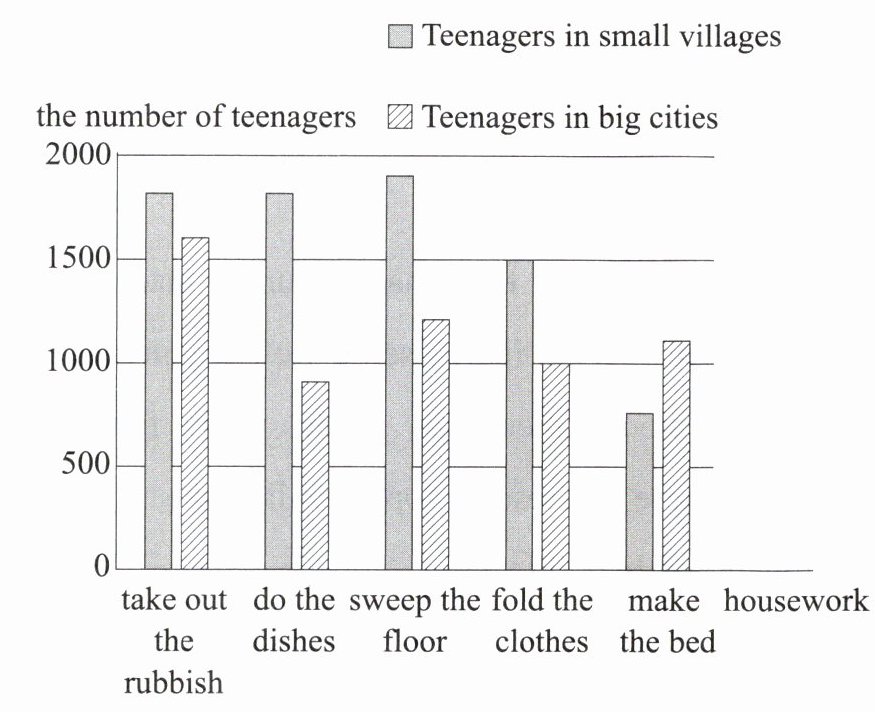
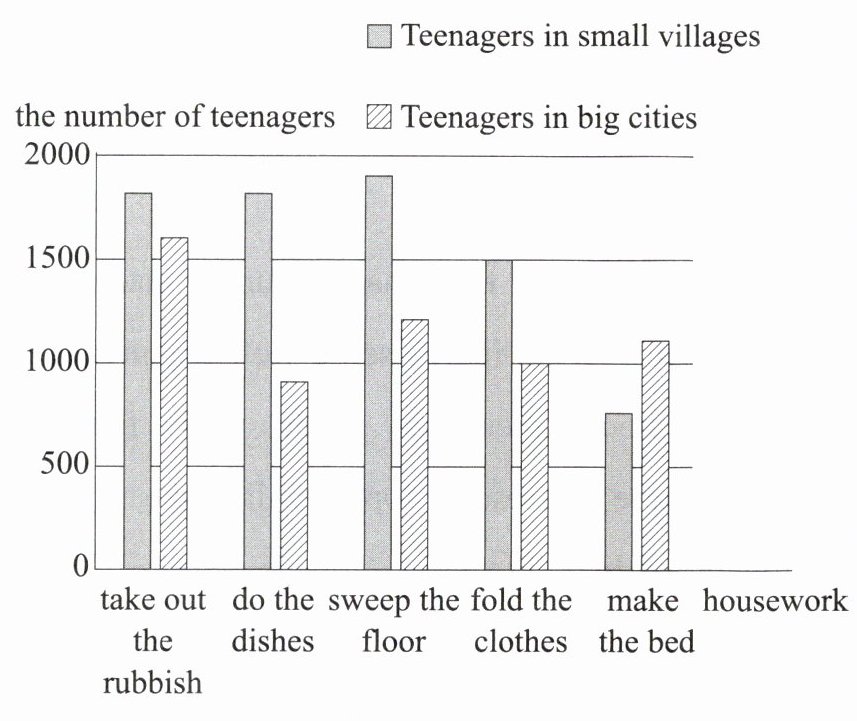
We can find out that teenagers in small villages do more housework than those in big cities. Maybe it is because teenagers in small villages live a harder life or their parents are too busy to look after them. As a result, teenagers in small villages are more independent than those in big cities. We will give our advice to parents in big cities. We think parents should give their children some housework to do because it's a good chance (机会) for teenagers to learn how to take care of themselves. Besides, they should give their children more free time so that they can do what they love to do.
19. Who does the underlined word "them" refer to (指代的是)?
It refers to
4,000 teenagers
.
20. In the survey, how many more teenagers in small villages fold the clothes than those in big cities?
There are
500
more teenagers in small villages folding the clothes than those in big cities.
21. Why do teenagers in small villages do more housework than those in big cities?
Perhaps because teenagers in small villages
live a harder life
or their parents are too busy to look after them.
22. According to the passage, what can teenagers learn by doing housework?
They can learn
how to take care of themselves
.
23. What do you usually do to help your parents at home?
I usually
help them take out the rubbish
.
解析:
翻译:
### Ⅳ. 任务型阅读(每小题2分,共10分)
[2024年陕西西安咸新区期中]
阅读下面短文,根据短文内容,完成下列各题。
众所周知,做家务对青少年的成长有益。小村庄里的青少年会在家做家务吗?大城市里的青少年情况如何呢?我们上个月做了一项调查。我们询问了中国的4000名青少年。其中一半来自大城市,另一半来自小村庄。让我们来看看调查结果。
我们发现,小村庄的青少年比大城市的青少年做的家务更多。这可能是因为小村庄的青少年生活更艰苦,或者他们的父母太忙而无暇照顾他们。因此,小村庄的青少年比大城市的青少年更独立。我们会给大城市的父母一些建议。我们认为父母应该给孩子安排一些家务来做,因为这对青少年来说是一个学习如何照顾自己的好机会。此外,他们应该给孩子更多的空闲时间,这样孩子们就能做自己喜欢做的事情。
19. 划线单词“them”指代的是谁?
它指代的是4000名青少年。
20. 在这项调查中,小村庄里叠衣服的青少年比大城市里的多多少?
小村庄里叠衣服的青少年比大城市里的多500名。
21. 为什么小村庄的青少年比大城市的青少年做的家务更多?
也许是因为小村庄的青少年生活更艰苦,或者他们的父母太忙而无暇照顾他们。
22. 根据这篇文章,青少年通过做家务能学到什么?
他们能学到如何照顾自己。
23. 你在家通常做什么来帮助你的父母?
我通常帮他们倒垃圾。